
An independent notebook from Manchester
Places worth a second visit
I return to the same New England places for years, then write down what changed and what stubbornly refused to. Some entries take a season, some take an hour.
- Rounds entries follow three visits in at least two seasons, and an errand is a single trip.
- Nothing here is sold, booked, sponsored, or arranged on your behalf, at any point.
- Entries run about twelve hundred words, which is roughly a six-minute read.
The latest entries, newest first
-
-

-
-

No. 04
A Trip Made Only for Noon
-

No. 05
Four Places on One Hill
-
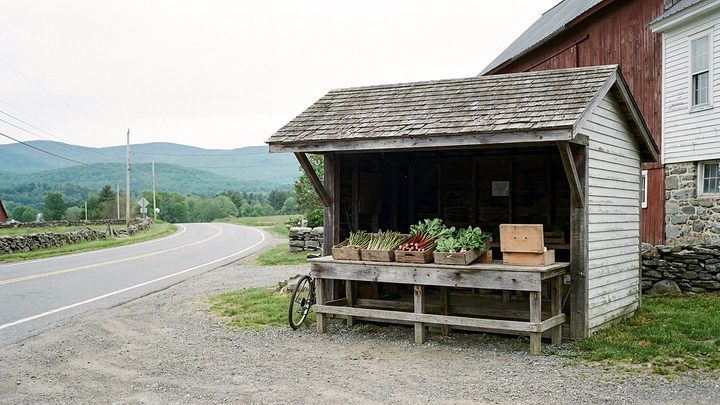
Rounds
Rounds are entries about one place seen many times over. Nothing enters this section until I have made three visits, in at least two seasons. A first visit records weather, parking, and my own impatience. The second visit starts to notice which door sticks, which corner floods in March, and which counter moved two blocks north without telling anyone. By the fourth visit the place stops performing for a stranger, which is when the writing finally becomes useful. Every entry in Rounds carries a visit count near the top, because I would rather show the arithmetic than imply authority. A place seen once or twice waits its turn in the folder.
The honest complication is that the place is not the only thing changing between visits. I am a year older, warmer or colder, rushed or unrushed, and carrying a different question each time. A mill yard in January and the same mill yard in July are two different buildings wearing one name. So the entries track both sides: what the town did, and what I noticed differently because of the light or the hour. It turns out that knowing when to go is worth rather more than knowing where. So each entry records the hour, the temperature, and the state of the parking lot, which sounds fussy until it saves somebody a wasted drive.
Errands
Errands are the other shape: one trip, one reason, and usually less than a day. A reading room that keeps unusual hours. A covered bridge whose deck boards record every repair the town has made. A clock tower that is either correct or gloriously wrong, depending on the month you ask. The errand gives the day a spine, and everything else that happens is a bonus I did not plan for. These entries stay practical: how long the drive took, where the stairs are, and what the hours actually were when I arrived. You can read the whole section at Errands.
The errand format also keeps me honest about scale. Not every trip has to mean something, and most of mine cheerfully do not. Some days the point is a hardware store with a wooden floor and a man who knows where the small hinges live. The write-up still records the drive, the parking, the hour, and whether it works for someone without a car. If a place turns out to deserve a longer look, it graduates into Rounds and gets visited again in another season. Most of them do not graduate, and that is a perfectly good outcome as well.
Why this notebook
Most travel writing is built around the first visit, because the first visit is where the surprise lives. That is a reasonable trade, and it produces a particular kind of sentence: bright, breathless, and out of date within a year. The trouble is that first impressions are the least reliable notes any of us collect. A town seen once through bad weather and low blood sugar becomes a story about weather and low blood sugar. I started this notebook because I wanted the second visit, the fourth one, and the visit where nothing happened at all. The first visit belongs to the traveler passing through, and these pages are written for the one who is coming back.
New England makes the method easy, since almost everything I care about sits within a day of Manchester. I can leave after breakfast, stand in one place for two hours, and be home before the light goes. The same drive in March and in September produces two entirely different reports, filed under one name. Over four years the road work moves, the river rises, a bakery closes, and a park adds a gravel path that quietly changes who can reach the water. One winter I did most of my reading in the waiting room of the small airfield north of town, which is the calmest room in the county at seven in the morning. None of that shows up on a single visit, and all of it matters to somebody planning one. Reading a town in one afternoon is a little like reading a long letter with your coat still on.
Here is what the notebook is not. It is not a booking service, a review site, or a place where towns get ranked against each other. I take no free stays, no comped meals, and no paid placements, and the About page sets out how the company behind the site is organized. Practical details are checked against public town, park, library, and state pages before an entry goes out. When something changes after publication, I add a dated line at the bottom rather than quietly editing the past. Every trip on this site was paid for and finished before a word of it was written, which keeps the arrangement simple. Corrections are welcome through Contact, and they are read by the same person who made the mistake.
How an entry is made
- Go back on purpose, with a notebook, a rough plan for the hour, and no expectation of finding a story.
- Write the visit down the same evening, while the details are still specific enough to be slightly annoying.
- Check every practical fact against public listings: town pages, park pages, library pages, and state pages.
- File the entry, then leave the place on the standing list, because the next visit will disagree with this one.
Notebook mail
The Margin, about twice a month
The Margin is a short letter that goes out alongside each new entry, carrying the one paragraph that did not fit. There are no tracking pixels in it, the list is never shared with anyone, and the unsubscribe link genuinely works.
Questions readers send
Do you take free trips, free stays, or paid placements?
No, and there is no arrangement sitting in a drawer waiting for a better year. Every drive, ticket, coffee, and parking meter in this notebook is paid for by the company that publishes it. If that ever changes, the change gets its own dated page and a line at the top of the affected entries. No entry is written in exchange for access, and no place is warned that I am coming. The Disclaimer page states the same thing in flatter language, and it applies to every entry in the archive.
How many times do you go back before writing?
Three visits in at least two seasons is the floor for Rounds, and five or more is usual by the time an entry appears. Errands work differently, since the entire point is one trip made for one specific reason. Every round shows its visit count in the small card under the introduction, so you can weigh the report accordingly. Places with one or two visits on the list wait in the folder until the third one happens.
Can I ask you to go somewhere specific?
Yes, and readers have sent me several of the better ideas on the current list. The Contact form has a topic called A place to revisit, which lands in the same folder as everything else. I cannot promise a trip or a date, because the schedule depends on seasons, road work, and distance from Manchester. If your suggestion turns into an entry, I will say so inside the entry itself. Suggestions that arrive with an hour, a season, and a reason attached tend to move up the list fastest. More answers live on the FAQ page, sorted into four plain categories.