
One Seat, Twelve Visits, One Year
One wooden seat in a Manchester park, one visit a month for a year, forty minutes each time. What you see from one spot when you keep sitting in it.
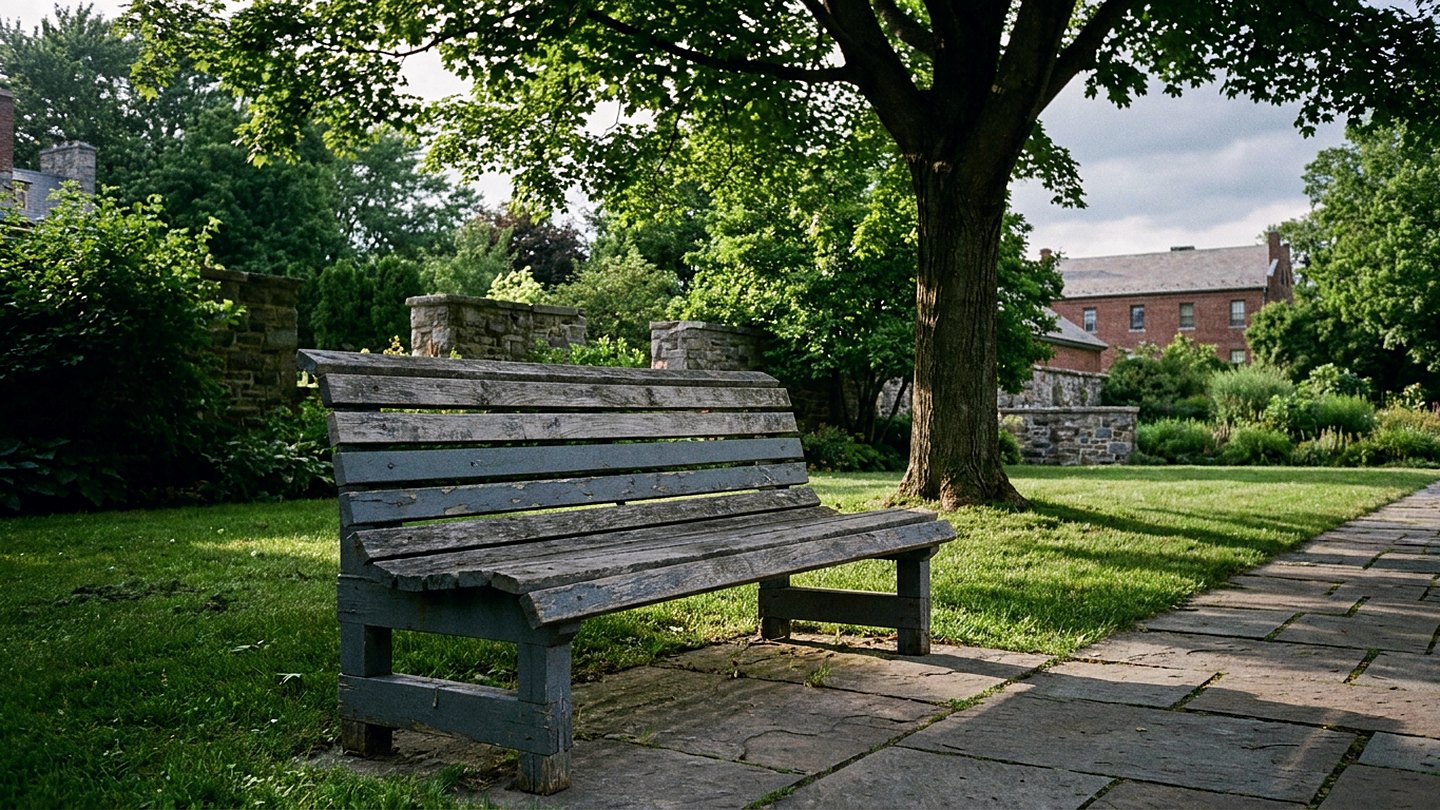
Last July I decided to sit in the same place once a month for a year and write down what happened. The place is a wooden seat in a city park in Manchester, at the north path, facing southwest, under a maple that is either generous or inconvenient depending on the month.
The rules were simple and I mostly kept them. Forty minutes. No phone except to check the time. Arrive between four and five in the afternoon. Write down anything I noticed, including things that did not seem worth writing down, which turned out to be the entire point.
Twelve visits, four hundred and eighty minutes, one seat. Here is what a year looks like from one spot.
The rules, and why they were harder than they sound
Forty minutes is a long time to sit in a public park doing nothing visible. I was self-conscious for the first three visits, mildly bored on the fourth, and after that it stopped being an activity and became a routine, which is when it started working.
The no-phone rule was the load-bearing one. The first month I checked the time nine times. By March I checked it twice. That change is not about discipline, it is about having enough to look at, and having enough to look at is a skill that arrives on its own if you make room for it.
The four to five window meant the light was different every month by a large margin. In December the light was gone before I was. In June it was still solidly afternoon when I stood up.
The cold half of the year
November through March, the park is a different building with the same address.
In December the maple was bare and the seat got sun for the whole forty minutes, which was a straight trade I had not anticipated: shade in summer, sun in winter, from the same tree. On the January visit the temperature was somewhere in the twenties, the path was salted white, and I lasted the full forty only because I had said I would.
Counts from the cold months, per forty-minute session:
- December: eleven people, six dogs, two strollers, one man practicing a golf swing with no ball
- January: four people, four dogs, zero strollers, one crow that stayed nineteen minutes
- February: seven people, five dogs, one stroller, two runners who passed twice each
- March: sixteen people, nine dogs, three strollers, first ice cream truck of the year
January drew four people and four dogs. By March the people had quadrupled and the dogs had roughly doubled. I have come to think of dog owners as the base load of a city park. Everything else is seasonal.
Sound in winter is the surprise. With no leaves, I could hear the traffic on the far side clearly, plus a door on a building I have never located, plus the specific ringing sound of a shovel on pavement two blocks away. In summer the leaves take all of that and turn it into a general hush.
Spring, when the volume comes back
April was the loudest change and it happened between two visits. In March the ground was flat brown and open. In April the maple had leaves the size of a thumbnail, the grass had gone aggressively green, and the number of people tripled.
I also learned in April that the seat had been repainted over the winter. Dark green, and the new paint had gone over a carved set of initials without filling it, so the carving is still there under the color, which is a very honest way to maintain something.
May and June are when the park is used the way it was designed to be used. A softball game most weeks on the field to the southwest. Two men who arrive separately, sit at opposite ends of the seat, talk for exactly the length of one cigarette, and leave in different directions. I saw them four times across the year and I have no idea whether they know each other.
Summer, and the accounting
By July the maple has closed over the spot completely and the forty minutes are cool even when the rest of the park is not. That shade is the single reason this seat is occupied more than the two others on the same path, and I lost my spot twice, in July and August, and sat on the grass and took notes on it anyway.
The full year totals, which I add up here because I promised myself I would:
- Visits: twelve, all completed, one moved by a day for rain
- Total people passing within about thirty feet: three hundred and forty-one
- Dogs: eighty-nine, of which four were the same tan one on four different visits
- Strollers: thirty-one
- Ice cream trucks: seven, all between March and September
- Times someone spoke to me: five, including two asking directions and one asking what I was writing
- Times I was rained on: once, in October, for nine minutes
Numbers like that are not a finding. They are a receipt. But the receipt is what lets me say that the park has a shape over a year, and that the shape is more regular than anything I would have guessed from a few random visits.
What one seat can and cannot show you
It cannot show you the park. My view is about a hundred and twenty degrees of it, and I never once walked the pond side during a session. Whole categories of the place are missing from my notes because they happen out of my sightline.
What it can show you is change at a scale small enough to hold. A repainted seat. A new litter basket in April. A tree taken down between the February and March visits, which I did not notice until I looked back at my sketch of the skyline and found a gap. The maple losing a limb in a storm and the cut being sealed within eleven days. None of these are events. Together they are what maintaining a park actually consists of, and the only way I saw them was by not moving.
Going back
I am doing a second year, with two changes. I moved my window to seven in the morning, because the whole cast will be different and I want to know how different. And I am counting fewer things, because half of what I counted turned out to say nothing at all.
Try it if you have forty minutes a month and any patience. Pick a spot with a decent view and a reason to come back to it, and write the boring parts down, because the boring parts are the ones that change.
Practical notes for this particular park. The paths are paved and level, and there is a step-free entrance at the north corner. Street parking nearby is free but limited to two hours on weekdays, which is more than enough. There is a restroom by the field that is open in the warm months only. The seat I use is in full sun from November through April and full shade from June through September, so dress for the version of the spot you are actually visiting, not for the one you remember.
What I checked
- Public pages of the city parks and recreation department, general park information and posted hours
- City pages for street parking rules and seasonal path maintenance
- Public library local history pages, general background on the park and its plantings

Asma Tarrant, founder and editor. Filed from Manchester, New Hampshire.